Favorite Books
Fiction
One Hundred Years of Solitude by Gabriel Garcia Marquez
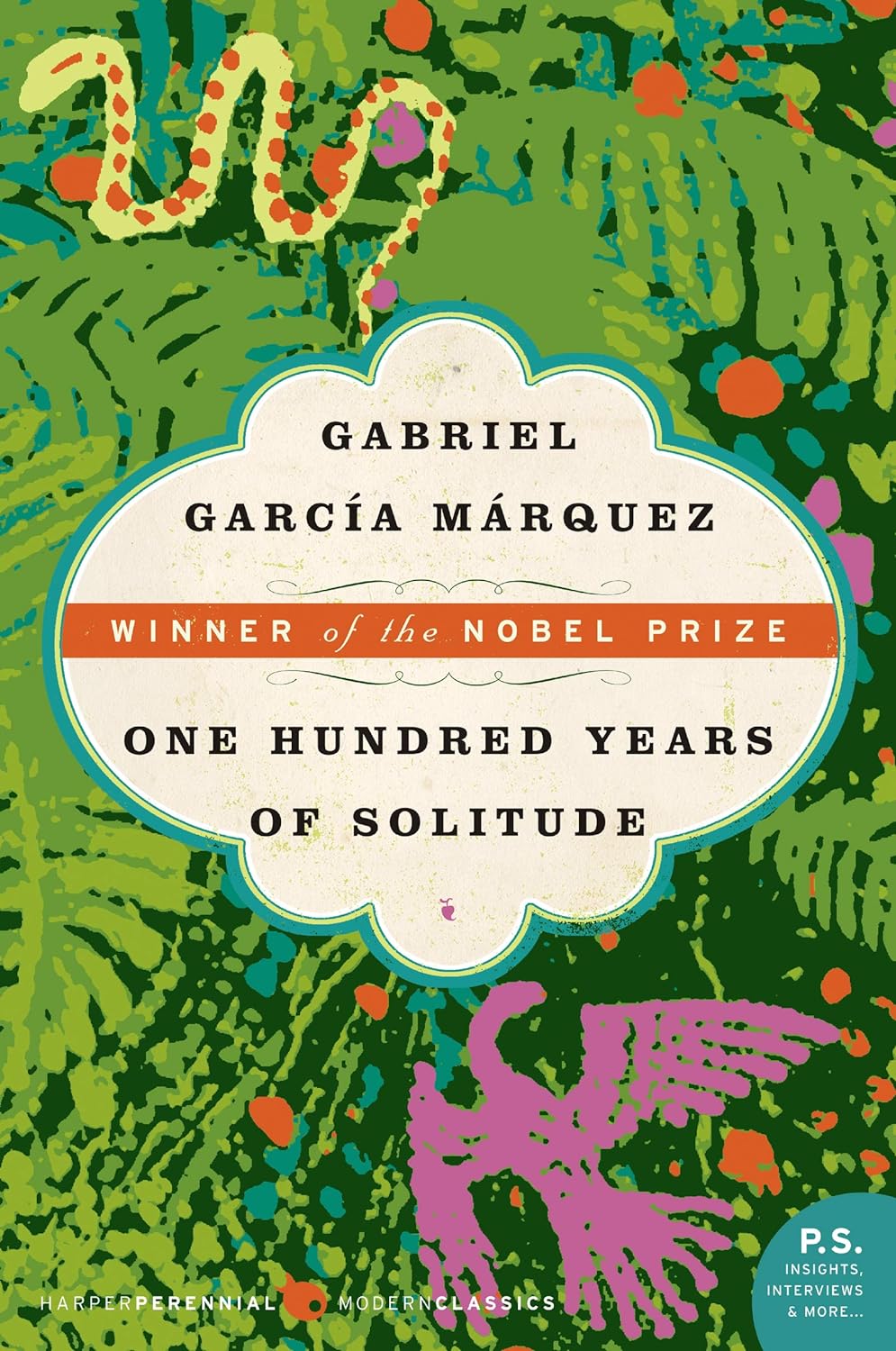
Many years later as he faced the firing squad, Colonel Aureliano Buendia was to remember that distant afternoon when his father took him to discover ice.
Moby Dick by Herman Melville
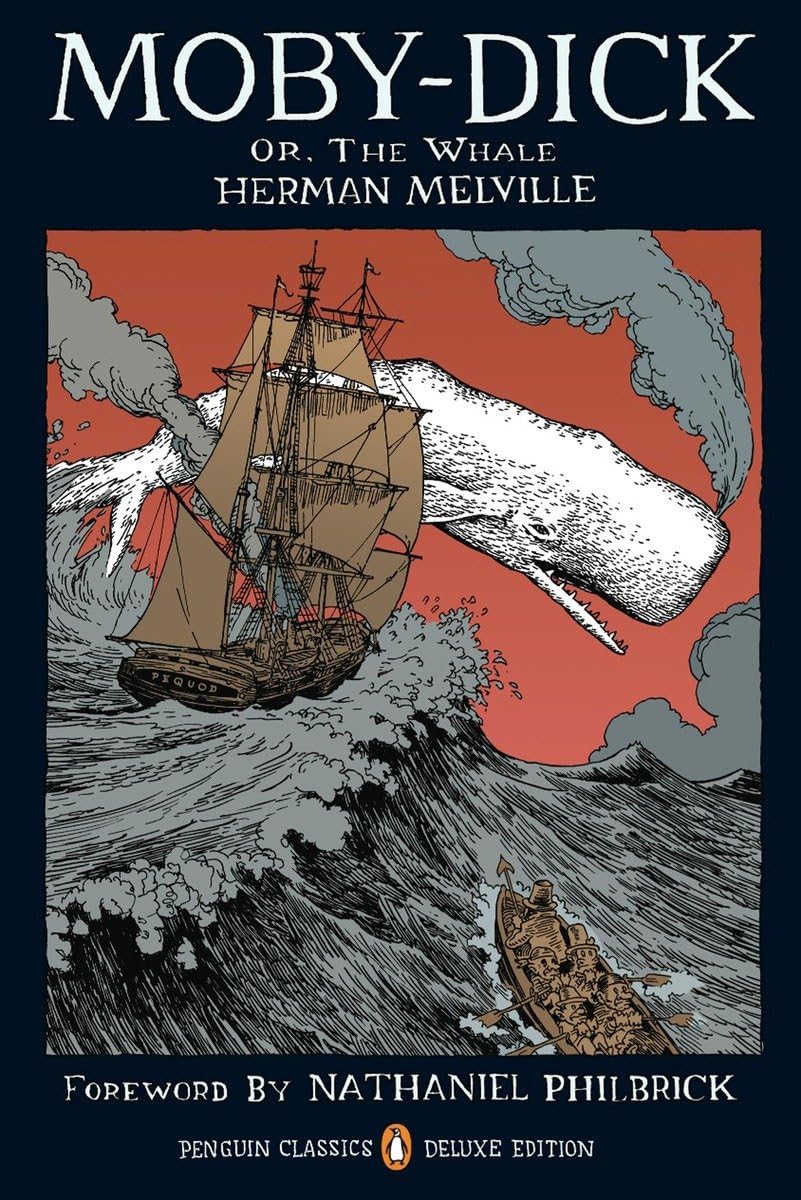
All that most maddens and torments; all that stirs up the lees of things; all truth with malice in it; all that cracks the sinews and cakes the brain; all the subtle demonisms of life and thought; all evil, to crazy Ahab, were visibly personified, and made practically assailable in Moby Dick. He piled upon the whale’s white hump the sum of all the general rage and hate felt by his whole race from Adam down; and then, as if his chest had been a mortar, he burst his hot heart’s shell upon it.
The City & The City by China Miéville
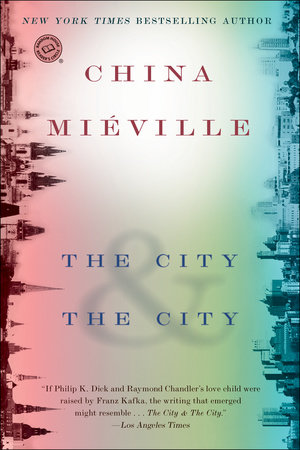
How could one not think of the stories we all grew up on, that surely the Ul Qomans grew up on too? Ul Qoman man and Besź maid, meeting in the middle of Copula Hall, returning to their homes to realize that they live, grosstopically, next door to each other, spending their lives faithful and alone, rising at the same time, walking crosshatched streets close like a couple, each in their own city, never breaching, never quite touching, never speaking a word across the border.
(Click to read my discussion of The City & The City.)
Frankenstein by Mary Shelley
Like Adam, I was apparently united by no link to any other being in existence; but his state was far different from mine in every other respect. He had come forth from the hands of God a perfect creature, happy and prosperous, guarded by the especial care of his Creator; he was allowed to converse with and acquire knowledge from beings of a superior nature, but I was wretched, helpless, and alone.
Nonfiction
Chronicle of Modern American Conservatism Series by Rick Perlstein
Before the Storm: Barry Goldwater and the Unmaking of the American Consensus
…Tom Kuchel stood up in the Senate to declare that 10 percent of the letters coming into his office—six thousand a month—were “fright mail” mostly centering on two astonishing, and astonishingly widespread, rumors: that Chinese commandos were training in Mexico for an invasion of the United States through San Diego; and that 100,000 UN troops—16,000 of them “African Negro troops, who are cannibals” [sic]—were secretly rehearsing in the Georgia swamps under the command of a Russian Colonel colonel for a UN martial-law takeover of the United States.
The latter rumor, which spread like wildfire… spoke volumes about the psychological paradoxes of running a democracy in a Cold War. In America citizens are charged with making their own sense of the world around them. But they were refused information to do so by Cold War secrecy. So they did what the could with the facts available. Secret armies trained in out-of-the-way forests did try to take over countries; we had tried it at the Bay of Pigs. (p.210)
Nixonland: The Rise of a President and the Fracturing of America
In this book I have written of the rise of two American identities, two groups of Americans, staring at each other from behind a common divide, each equally convinced of its own righteousness, each equally convinced the other group was defined by its evil. I have written of the moments where, at the extreme, members of these groups killed one another or tried to kill one another, most often in cold blood. Klansmen killing civil rights marchers in Selma; and two pacifists shot through the back of the head in Richmond, Virginia, and left in a ditch; a hippie shot in the back of the head in New Mexico. A teenager shooting a rabbi dead during a service in Louisville, crying, in the New Left’s language, about the congregation’s “phoniness and hypocrisy.” Weathermen preparing bombs for a massacre at a servicemen’s dance at Fort Dix. Vigilante Cubans setting fires and bombs at the offices of Soviet attachés and talent agents handling Soviet artists. State police carrying out extrajudicial killings following the pacification of the riot in Newark; black nationalists ambushing cops in Cleveland. I have dedicated this book to the memory of these Americans killed by other Americans, for reasons of ideology. (p.746-747)
The Invisible Bridge: The Fall of Nixon and the Rise of Reagan
Reaganland: America’s Right Turn 1976-1980
History of the Modern World Series by Eric Hobsbawm
The Age of Revolution, 1789-1848
He became First Consul; then Consul for life; then Emperor. And with his arrival, as by a miracle, the insoluble problems of the Directory became soluble. Within a few years France had a Civil Code, a concordat with the Church and even, most striking symbol of bourgeois stability, a National Bank. And the world had its first secular myth. (p.74)
The Age of Capital, 1848-1875
The most obvious drama of this period was economic and technological: the iron pouring in millions of tons all over the world, snaking in ribbons of railways across the continents, the submarine cables crossing the Atlantic, the construction of the Suez canal, the great cities like Chicago stamped out of the virgin soil of the American Midwest, the huge streams of migrants. It was the drama of European and North American power, with the world at its feet. But those who exploited and conquered the world were, if we except the numerically small fringe of adventurers and pioneers, sober men in sober clothes, spreading the respectability and a sentiment of racial superiority together with gasworks, railway lines and loans. (p.4)
The Age of Empire, 1875-1914
The Age of Extremes, 1914-1991
The Jakarta Method by Vincent Bevins
Second, Washington’s violent anticommunist crusade destroyed a number of alternative possibilities for world development. The Third World movement fell apart partly because of its own internal failures. But it was also crushed. These countries were trying to do something very, very difficult. It doesn’t help when the most powerful government in history is trying to stop you. It’s hard to say how they might have reshaped the world if they were truly free to experiment and build something different. … It’s not clear we even have the ability to imagine what could have been different. (p.241)
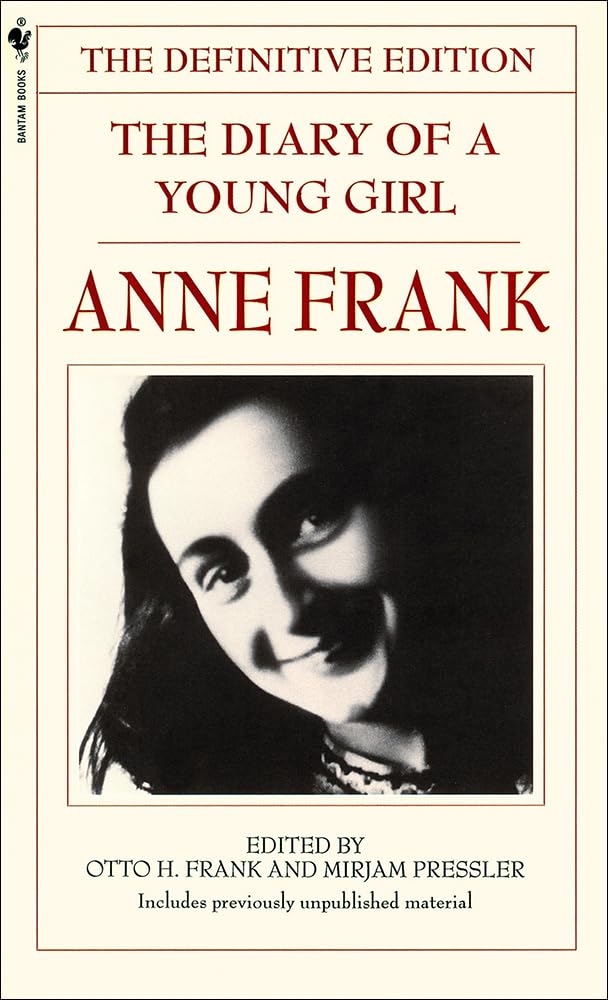
The Diary of a Young Girl by Anne Frank
In spite of everything I still believe that people are really good at heart. I simply can’t build up my hopes on a foundation consisting of confusion, misery, and death. I see the world gradually being turned into a wilderness, I hear the ever approaching thunder, which will destroy us too, I can feel the sufferings of millions and yet, if I look up into the heavens, I think that it will all come right, that this cruelty too will end, and that peace and tranquility will return again.
Fermat’s Enigma by Simon Singh
Suddenly I had this incredible revelation. … It was so indescribably beautiful; it was so simple and so elegant. I couldn’t understand how I’d missed it and I just stared at it in disbelief for twenty minutes. Then during the day I walked around the department, and I’d keep coming back to my desk looking to see if it was still there. It was still there. I couldn’t contain myself, I was so excited. It was the most important moment of my working life. Nothing I ever do again will mean as much.